Meaning revealed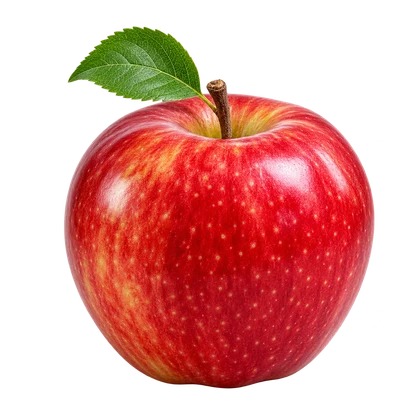
AppleInc.Technology company
An appleTHINK BEYOND ANSWERS
Turn AI explanations into knowledge you can use—with a four-part grid you write, check and connect.
AI made it sound clear. Can you explain it when the question changes?
Write the relationship on the left.
See the connections on the right.
Select an entry to trace its connection and check status.
| Starting point | Relationship | Conditions | Result |
|---|---|---|---|
| supports | The outside factor multiplies every term inside the brackets. | Expand bracketsChecked | |
| helps | An expression contains brackets that need to be expanded. | Simplify expressionsReview in 3 days | |
| helps | Each transformation preserves the equation’s solutions. | Solve linear equationsNot checked | |
| support | Add or subtract the same quantity on both sides; multiply or divide by the same non-zero quantity. | Solve linear equationsNot checked |
Interactive example. This does not change your saved draft.
CheckedExample check status
Distributive lawsupportsExpand brackets
ConditionsThe outside factor multiplies every term inside the brackets.
Return to this notebook entryAn illustrative product concept. Each connection has a recorded relationship and conditions. Review reminders and automatic connections are planned features.
Write your first gridAI can help. You still do the thinking.
Start with a real question. State what you know, how the ideas connect, when the relationship holds and what follows.
Explain it in your own words. Test it in a new situation. Record what needs checking or revisiting.
Connect the entry to earlier ideas. Revisit it later, so your notebook records more than a moment of recognition.
You don’t need to learn the whole method first.
Choose a situation that feels familiar.
Try the Card Lab: add a context or condition and watch the result change →
I know the Industrial Revolution timeline. I still can’t explain what changed.
Factory jobs
draw workers towards
Where factory employment grows in towns. Transport, housing and local conditions also matter.
Growing towns and cities
The right document appears in the logs. Why is the final answer still wrong?
A retrieved document
can support
The relevant passage reaches the final context, and the answer uses its evidence accurately.
An evidence-grounded answer
I said “use a min-heap.” Then the interviewer asked, “What if K is very large?”
A size-K min-heap
retains
Useful for a stream or relatively small K. For static data, compare selection and sorting approaches.
The largest K items
We’ve practised expanding brackets. A new question still turns −2(x − 1) into −2x − 2.
−2(x − 1)
expands to
Multiply −2 by both x and −1.
−2x + 2
I can define renewal rate. But I freeze when asked why the business depends on it.
Customer acquisition cost
is recovered through
In a subscription business where the first period’s gross profit does not cover acquisition cost.
Gross profit from continued renewals
My supervisor said “p < 0.05 doesn’t mean your conclusion is right.” I’m lost.
A p-value
measures
Assume the null hypothesis and statistical model hold; define the relevant tail or extremeness criterion.
The probability of an equally or more extreme test statistic
What are you trying to understand?
Put it into a gridIllustrative examples of the method. They are not automatically generated diagnoses or claims about a learner.
When you can state the relationship and its conditions, you can question an answer and explain the judgement behind it.
A new example tests whether the relationship still makes sense when the surface details change.
One grid brings together ideas from more than twenty learning-science studies.
Full bibliography (Chinese)| In the grid | Related research |
|---|---|
| Starting pointWhat you already know | Prior knowledge and learning hierarchiesAusubel · Gagné |
| RelationshipHow ideas connect | Self-explanation, elaborative questioning and concept mappingChi · King · Novak |
| ConditionsWhere a relationship holds | Conceptual change and the limits of an existing explanationPosner |
| ResultWhat follows, then test it | Generation, retrieval practice and spaced practiceSlamecka & Graf · Roediger & Karpicke · Cepeda |
The research helps explain the design: activate prior knowledge, explain relationships, state their limits, then retrieve and test what you have learned.
Evidence for these learning mechanisms is not the same as direct validation of MindLattice as a product. We do not promise grades, admissions or job offers.
Developed through
AI and education research.
OCG methodology author and AEGT principal researcher, working on AI education and AI psychology.
Co-developed with an education researcher with a doctorate from the University of Otago and experience in educational practice.
Choose the support your work calls for.
Keep building on what you learn.
Optional: a course in building your own grids.
Monthly or annual subscription planned
In development. Pricing to be announced.Explore the methodSee individual progress and shared sticking points.
Optional: teacher or facilitator training.
Annual per-learner pricing planned
In development. Pricing to be announced.Explore the methodMake expert reasoning usable in your own AI system.
Optional: a custom domain map.
Annual licensing planned
In development. Pricing to be announced.Explore the methodProduct plans are in development. Subscriptions, team dashboards, AI-guided writing and licences are not available to purchase here.
You can try the method now. This is a manual worksheet: write your explanation, add a question that would test it, then save or download your draft.
We expanded −2(x − 1) to −2x + 2. Now change the numbers.
This check covers one algebra example. It does not automatically assess your own topic or prove lasting mastery.
 Domain 1 · Fruit
 Domain 2 · Technology company
 Apple Inc.